
Onions are a Chef’s staple ingredient

There’s a reason why professional chefs start almost every dish with onions. These humble vegetables are the unsung heroes of the kitchen, transforming ordinary meals into extraordinary culinary experiences. If you’ve ever wondered why some home-cooked meals lack that special “restaurant quality” flavour, mastering onions might just be your missing ingredient. Let’s dive into the world of onions and discover how to use them like a pro!

The onion flavour is affected by the cooking method
Onions can offer a range of flavours, depending on how they are prepared.
- Raw onions: Strong and astringent
- Lightly sautéed onions: More rounded in flavour
- Caramelized onions: Sweeter and richer
The versatile role of Onions in Mirepoix
Have you ever come across the term ‘Mirepoix’ while watching cooking shows like MasterChef? Often referred to as the “holy trinity” in some countries, Mirepoix is a simple yet versatile flavour base that can be found in numerous dishes. Onions, in particular, play a crucial role in this classic culinary combination.
In Mirepoix, the usual ratio is 2 parts onion, 1 part celery, and 1 part carrot. This combination creates a harmonious balance that is the foundation for many delicious dishes.
The Classic Mirepoix Components
Mirepoix typically consists of onions, celery, and carrots. However, celery and carrots can be substituted with other vegetables for those with food allergies or specific preferences. Options like fennel or bell peppers can be used, but onions remain an essential ingredient due to the rich and varied flavours they contribute.
Onions commonly found in our (Australian) Supermarkets
Each variety has its distinct flavour profile and culinary uses. Some of the common onion varieties you can find in Australia include:
- Brown Onions: The most common variety, brown onions, has a strong, pungent flavour, making them ideal for various cooked dishes, including soups, stews, and sauces.
- White Onions: Milder in flavour than brown onions, white onions are versatile and can be used both raw and cooked. They’re perfect for salsas, salads, and Mexican dishes.
- Red Onions: Known for their vibrant colour and slightly sweet taste, red onions are popular in salads, sandwiches, and burgers. They can also be grilled or caramelized for a deliciously sweet and smoky flavour.
- Spring Onions (Scallions): With a delicate flavour and tender texture, spring onions are often used as a garnish or added to salads, stir-fries, and Asian dishes.
- Shallots: A small, sweet, and mild onion variety, shallots are perfect for salad dressings, sauces, and delicate dishes where a more subtle onion flavour is desired.
- Leeks: Although not technically an onion, leeks are closely related and have a similar mild and sweet taste. They’re often used in soups, stews, and quiches. When leeks are cooked longer, they become creamy, which is great for pie fillings and dishes needing a creamy sauce.
With such a wide range of onion varieties available in Australia, there’s always an opportunity to explore new flavours and culinary techniques. Embrace diversity and enhance your dishes with the perfect onion for every occasion.
How to cut Onions like a Chef
The No-Tears Method
- Chill your onion in the fridge for 30 minutes before cutting
- Use a sharp knife (dull knives release more tear-inducing compounds)
- Cut near your rangehood with the fan on
- Keep the root end intact until the final cuts
Basic Cutting Techniques
- Slice off the top, leaving the root intact
- Cut in half through the root
- Peel off the skin
- For diced: Make horizontal cuts, then vertical, then cross-cuts
- For sliced: Cut along the grain for caramelising
The Art of Caramelising Onions
Nothing beats the sweet, rich flavour of properly caramelised onions. Here’s how to nail it:
- Slice onions evenly
- Use a heavy-based pan on medium-low heat
- Add butter and olive oil
- Cook slowly for 30-40 minutes, stirring occasionally
- Season with salt and a pinch of sugar (optional)
Storage Tips
- Store whole onions in a cool, dark, well-ventilated space
- Keep cut onions in an airtight container in the fridge for up to 7 days
- Never store onions near potatoes – they’ll both spoil faster. I keep mine in separate cupboards. 😍
Let’s discuss when to use the different onion varieties
Brown Onions
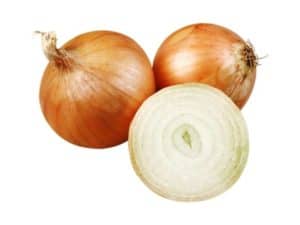
The most commonly used onion has dry golden skin, With greenish-white flesh and is pungent. They have a balanced sweet/astringent taste. These onions are the most widely used of all onions in Australia because they’re pretty much an all-rounder and have the longest shelf life. They are high in sulphur and have a more complex flavour due to their drying of them.
Red Onions
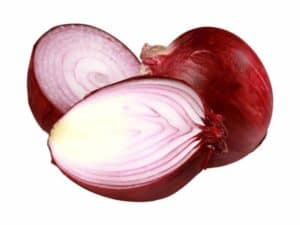
Red onions would be our second most used onion. They’re sometimes called Spanish onions, but I have no idea why. They’re milder and sweeter than brown onions, giving your dish a sweeter flavour if cooking. One great use is that they’re sliced very finely and used in salads. They’re perfect for consuming raw, lightly fried or added as a sweet, colourful addition to salads. There’s a brilliant recipe on the Cookidoo site; its name is Caramelised Red Onion Chutney. I always make this and pour it into small jars ready to serve with my cheese boards. They are also excellent for quick pickling. I sometimes use them in sauces and chutneys to add that extra sweetness that will balance the recipe without adding as much sugar. Check out my tips on Quick Pickles.
White Onions
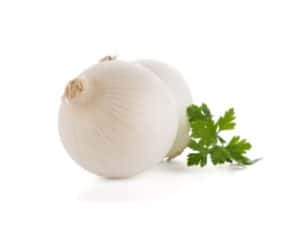
White onions are not used as much in Australia but they shouldn’t be overlooked. They have a greenish-white flesh and a strong sharp taste. They’re often mistaken for a salad onion, but the dried version is best used for cooking, in my opinion. My choice is to use them in chutneys and cooked spiced dishes.
Pickling Onions, Pearl Onions or Cocktail Onions
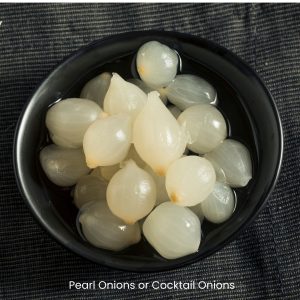
Pickling onions are small, firm onions that are ideal for preserving in vinegar or brine. They are often used to make tangy, crunchy accompaniments for various dishes or served as a condiment on their own. There aren’t too many of these around, although you might find them in our larger fruit and vegetable stores when in season. They are mainly used for pickling or as cocktail onions; you can find them in jars in any supermarket in the Anti Pasto aisle.
Fresh onions, on the other hand, are the milder versions of dried onion. They’re sold singularly or in bunches, usually with the tops intact. They can be lightly cooked, pan-fried or used in salads. They are seasonal, of course, fresh, and they are called many different names. Not many of us know how to use them, and you don’t always see them.
Spring Onions
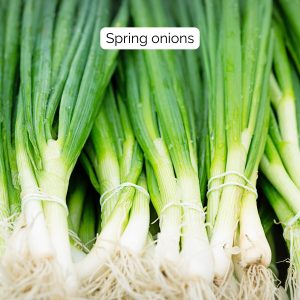
Spring onions, sometimes called shallots, which they are not, are often used in salads or stir-fries. The larger they are, the stronger the flavour; they can be cooked or raw. People who are fructose intolerant can often consume the green but not the white portion of these.
Shallots
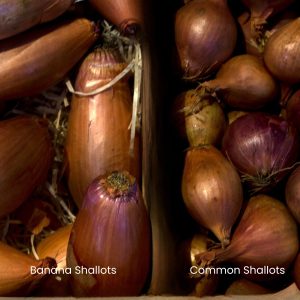
Shallots have either golden coppery skin or darker coppery red skin. The more you brown them, the stronger and more bitter the flavour becomes. If you keep the cooking to a minimum, you’ll release a slightly sweet, spicey taste. If you can get banana shallots, they’re easier to peel, they’re the longer tapered ones.
What is Onion Powder?
Onion powder is a convenient seasoning made from dehydrated, freeze-dried, or flow-dried onions. Some commercial onion powders undergo irradiation to eliminate microbial contamination. However, there are two main reasons why I avoid using onion powder;
- Clumping: Onion powder with a moisture content of 4-5% can clump or harden inside the jar or container, making it difficult to use.
- Anti-caking agents: Some onion powders contain added anti-caking agents to prevent clumping.
It’s worth noting that onion powder is approximately 10 times stronger in flavour than fresh onion. Keep this in mind when substituting it in recipes.
What do I use instead of onion powder?
As an alternative, I prefer using dried onion flakes. If my recipe calls for powder, I grind it just before using it or incorporate it into a spice blend. The other spices in the blend help prevent the mixture from solidifying in the jar, ensuring a more enjoyable and hassle-free cooking experience. Ta Da! 😁
What is Onion salt?
Onion salt may be used as a seasoning in place of straight salt. The commercial varieties have a ratio of around 1 part salt to five parts dehydrated onion and usually contain an anti-caking agent. I tend not to use these, even though they’re handy. I have the tools and equipment to make my own onion salt without having to add anti-caking agents, making it up in small quantities and using it as needed.
Are onions good for you?
Onions contain fructose, to which some have an intolerance. But if that’s not you, then Yes, you could call them a superfood. 😉 They are full of antioxidants and anti-inflammatory elements. And that’s all I’m saying because I’m not a Doctor. 😁🤪
Recipe examples that show the importance of onions
- Want a condiment that works so well on burger patties? Try Bec’s Bacon Jam
- A winter classic – Slow cooked Lamb Shanks
- A summer delight – Greek watermelon feta salad
- If you own a Cookidoo subscription you have to try this. Serve this over soft cheese that you’ve made at home or Philly works too.
How to store onions
- Store whole raw onions in a cool, dark place between 7 and 13 degrees °C (45 and 55 degrees °F). This can help them last for two to three months.
- Once an onion is cut, it should be stored in the refrigerator. Otherwise, it should be placed in an airtight container, preferably glass, since plastic can absorb odours.
- Sliced, cut, or diced onions can be kept in the fridge for up to 10 days when wrapped tightly in plastic or stored in a container.
- It’s essential to regularly check stored onions and remove any that appear to be spoiling, as one spoiling onion can cause the rest to spoil faster.
Nutrition Information
Onions are packed with antioxidants, vitamin C, and prebiotics for gut health. They’re also low in calories and add tons of flavour without fat.
Ready to elevate your cooking game with onions?
If you have questions (I love questions), use the comment box. 👇
Have you heard of Vidalia Onions? We have them here in the South of the United States. They are a sweeter onion and are very good. Summertime is when we usually see them in the grocery store or at farmers markets.
Hi Pat, yes, I’ve seen and used them but didn’t know their name. Our supermarkets really don’t give us a lot of choice in Australia but if you have a quality green grocers near by you can often find this sort of thing when they’re in season. You’ll see this sort of onion April to August in Australia.
Hi Bec, I recently went to a restaurant where they served a caramelised onion butter with warm focaccia. It was very light almost like a dip and the most divine dish I have enjoyed in a long time. Would you know of any recipe ? I have googled but can’t find anything similar.
Thank you for all your great advice and tips.
Hey Dorothy, I don’t, but I don’t suppose you took a photo of it? I’d love to have a play if it was that good.
When I was growing up my Mum always used white onions. They were then what brown onions are today. She also in season, used salad onions to make lovely white sauce to have with corned beef. They came with the tops in tact.
Yes they still do here in Melbourne, but it depends on where you buy your veg. I don’t think I’ve seen them in the big 3 for years.